
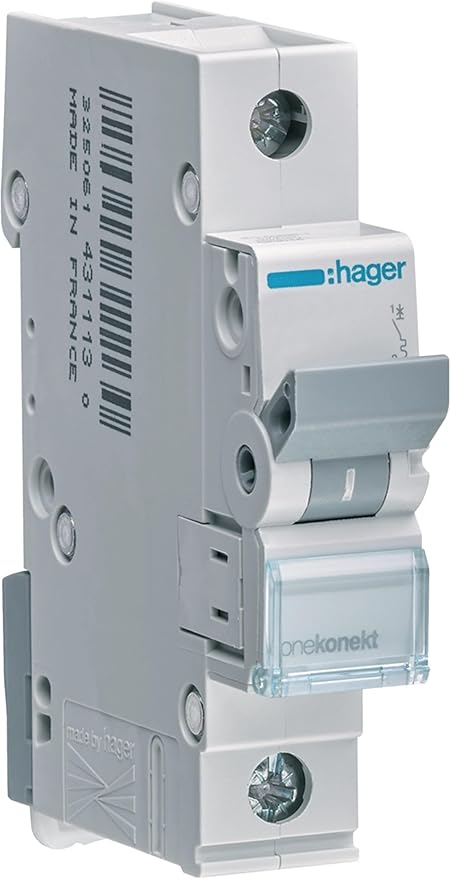
A Hager 16A single-pole breaker works by using two different internal mechanisms to protect your electrical circuit. It acts as a “smart switch” that automatically flips to the OFF position if it detects a dangerous situation.
Here is the breakdown of how those two mechanisms work:
1. The Thermal Trip (Protection against Overload)
This protects your wires from overheating when you plug in too many appliances.
-
The Component: A bi-metallic strip (two different metals bonded together).
-
The Action: As current flows through the breaker, it generates heat. If you pull slightly more than 16A for a prolonged period, the bi-metallic strip heats up and begins to bend.
-
The Result: Once it bends far enough, it hits a trip bar that releases the spring-loaded contact, cutting the power. This is why you often have to wait a minute for a breaker to “cool down” before it will let you reset it.
2. The Magnetic Trip (Protection against Short Circuits)
This is for “instant” protection when a catastrophic fault occurs (like a hot wire touching a neutral wire).
-
The Component: A magnetic solenoid (a coil of wire around a metal piston).
-
The Action: In a short circuit, the current spikes to hundreds of amps instantly. This massive surge creates a powerful magnetic field in the solenoid.
-
The Result: The magnetic force “shoots” a plunger forward, instantly hitting the trip lever. This happens in milliseconds—much faster than the thermal strip—to prevent electrical fires or explosions.
The Hager “QuickConnect” Advantage
In many newer Hager models (like the QC series), the way the breaker connects to the wiring is also specialized:
-
Screwless Terminals: Instead of tightening a screw, you push the wire into a spring-loaded terminal. This maintains constant pressure on the wire, preventing the “loose wire” heating issues common in traditional screw-type breakers.
Status Indicators
On a Hager breaker, you will see a clear visual indicator:
-
Green: The circuit is isolated (Safe).
-
Red: The circuit is closed and live (Danger).
-
Center Position (Optional): Some models have a middle “Trip” position to show the breaker didn’t just get turned off manually, but actually failed due to a fault.

Reviews
There are no reviews yet.